

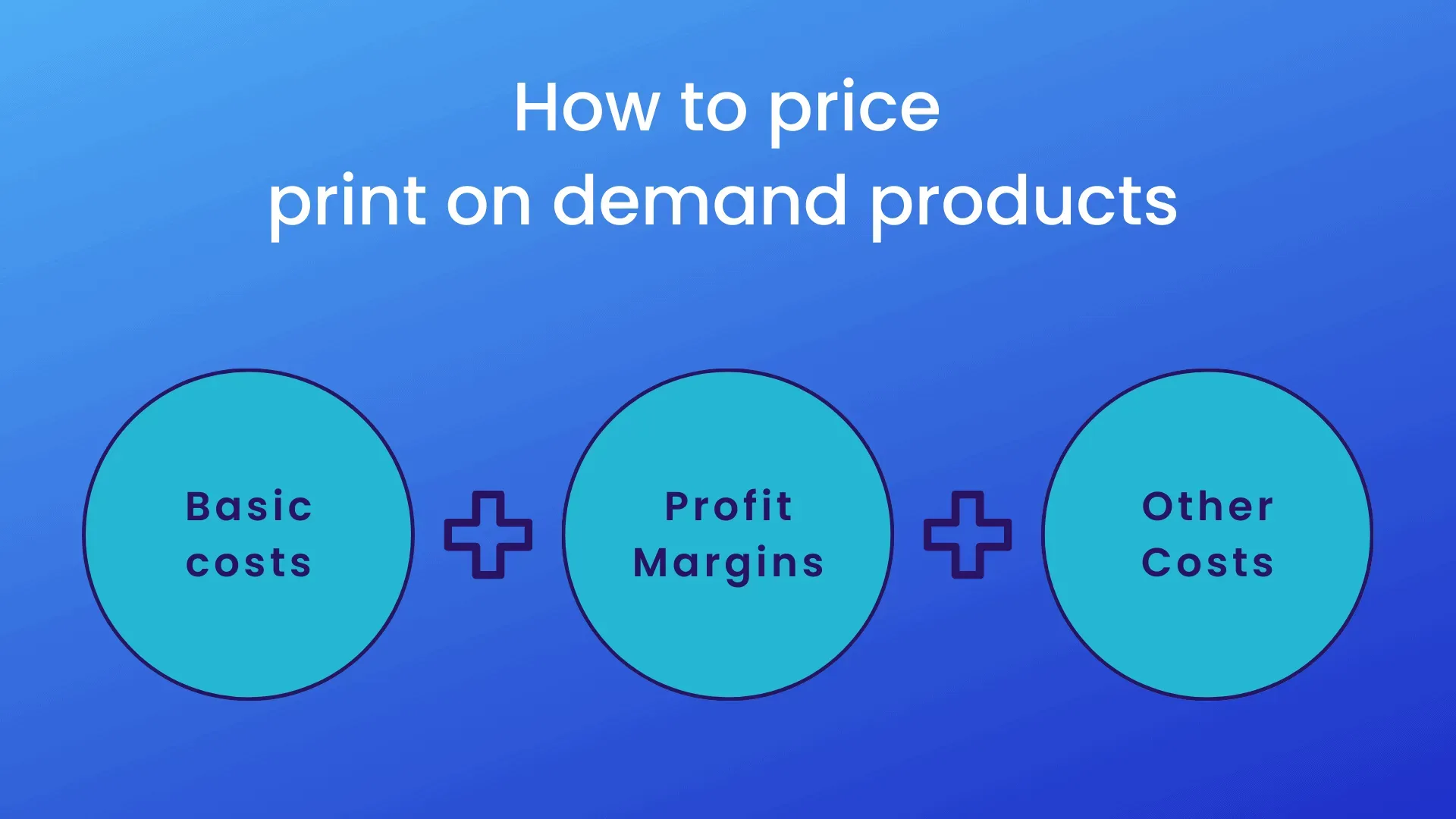
In pricing print on demand products, the price you set signals value and drives profitability in today’s ecommerce landscape. For creators, designers, and store owners, the price you set isn’t just a number—it’s a signal of value, a lever for profit, and a key factor in customer perception, a core aspect of POD pricing strategies. This guide will help you master print on demand pricing by detailing cost structures, pricing strategies, and practical steps you can apply today. By understanding the fundamentals of POD pricing strategies and aligning them with market expectations, you’ll be better positioned to protect margins while remaining competitive. This approach blends transparent costs, targeted margins, and clear value messaging to boost both profitability and trust.
Another way to frame the topic is price setting for on-demand merchandise through cost-based pricing POD, value-based pricing, and tiered pricing POD, which emphasizes bundles and volume incentives. Using LSI-friendly terms such as print-on-demand product pricing, dynamic pricing for POD, and bundle pricing helps align content with related searches and customer intent. This broader framing ties profitability, margin management, and cost control to customer value, making the topic accessible and actionable.
Frequently Asked Questions
How does cost-based pricing POD apply to pricing print on demand products?
Cost-based pricing POD involves adding a target margin to your total per-unit cost. Start by calculating all per-unit costs (COG, printing, packaging, shipping, platform and processing fees, returns reserve, and marketing amortization). Then set price = total_cost ÷ (1 − target_margin). For example, with a total per-unit cost of 10.50 and a target margin of 40%, price = 10.50 ÷ 0.60 = 17.50. This approach ensures costs are covered and margins are protected while you test market response.
Which POD pricing strategies help protect profit margins for POD products?
POD pricing strategies include cost-based pricing POD, value-based pricing, market-based pricing, tiered pricing POD, psychological pricing, and dynamic pricing. Use a mix to safeguard profit margins for POD products by matching perceived value, competitive parity, and unit economics while testing price sensitivity in your niche.
How can tiered pricing POD be used in pricing print on demand products to increase value and margins?
Tiered pricing POD lets you offer bundles or multi-pack discounts that raise average order value without eroding base margins. Example: a single item at 18.00 and a 3-pack at 49.50 (per-unit 16.50). Tiered pricing POD can drive higher cart size while keeping core product profitability and signaling value in your print on demand pricing.
Why should I factor platform and payment fees into print on demand pricing?
Platform and payment fees reduce your net revenue, so include them in your pricing model. Calculate price using margins after these fees (e.g., target_net = price × (1 − platform_fee − processing_fee); solve for price). This aligns print on demand pricing with actual profitability and prevents subsidizing sales.
What role does value-based pricing play in POD pricing strategies for print on demand pricing?
Value-based pricing in POD pricing strategies prices by perceived value, branding, and design quality rather than cost alone. If your niche sees high value, you can command premium pricing while clearly communicating benefits. Combine value-based pricing with cost and market insights to protect profit margins for POD products.
| Aspect | Key Points |
|---|---|
| Cost Structure Components |
|
| Pricing Approach |
|
| Pricing Strategies |
|
| Practical Steps to Price POD |
|
| Practical Example |
|
| Common Pitfalls |
|
| Tools & Templates |
|
Summary
Pricing print on demand products is a balanced, descriptive process that accounts for real costs, customer value, and competitive dynamics to protect margins while staying attractive. By pairing cost-based foundations with value-driven adjustments, market awareness, and thoughtful bundling, you can set prices that reflect both cost and perceived worth. Use the practical steps outlined to build a repeatable, data-informed pricing process that supports sustainable growth and scalable, profitable sales.