

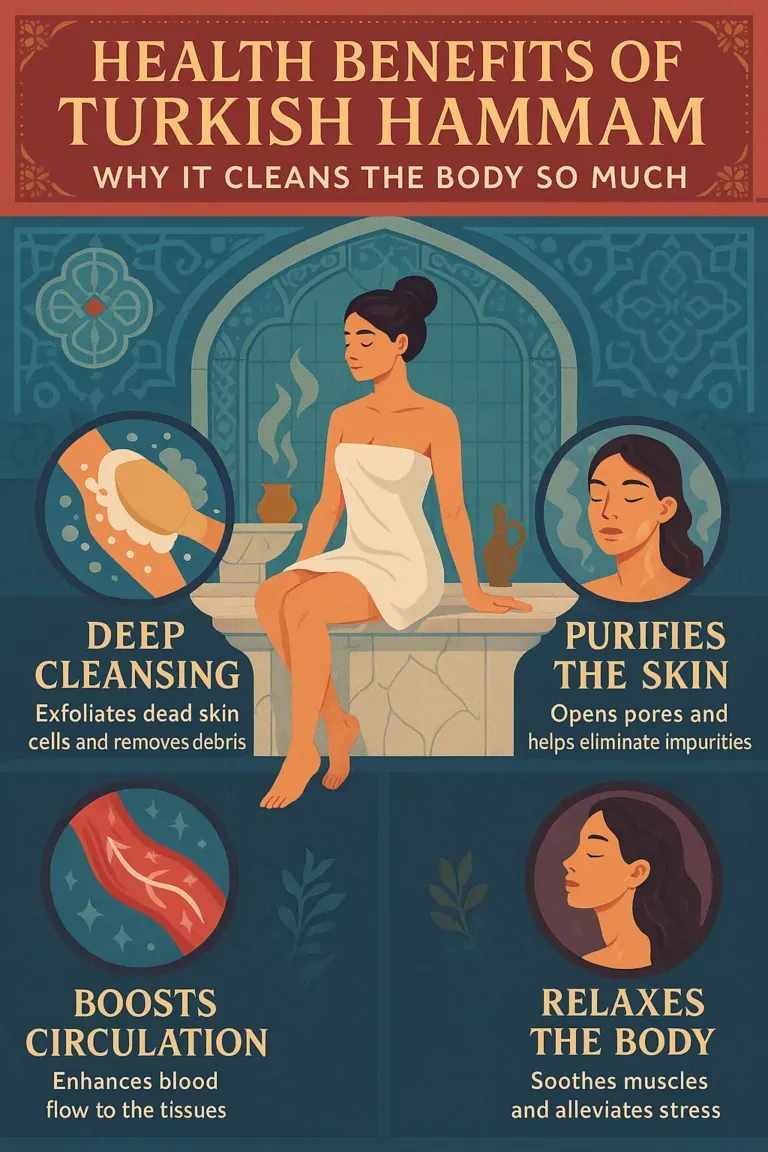
Health benefits of Turkish hammam extend beyond cleansing to touch the skin, the circulatory system, and a renewed sense of well-being, weaving heat, humidity, and ritual into a holistic experience that can be enjoyed by travelers and locals alike, with careful guidance to ensure comfort, hydration, and safety during every step of the traditional process. For many people, Turkish hammam benefits for skin manifest as steam-softened pores accepting exfoliation, revealing a brighter complexion, improved texture, and better moisture retention, while the longer-term routine can support a more resilient skin barrier when paired with a consistent skincare regimen and mindful post-session care. The warm, humid air actively promotes Turkish bath circulation benefits by encouraging vasodilation and increased blood flow to the muscles and the surface of the skin, enabling nutrient delivery and the removal of metabolic wastes as you settle into a rhythm of cleansing, massage, and restorative rest between marble benches. Beyond the body, hammam relaxation and stress relief emerge from slowed breathing, mindful attention to sensation, and the social, ceremonial cadence that characterizes many hammams, helping guests shift into a calmer mental state and carry that sense of ease back into daily life. Appreciating the Turkish bath ritual traditions and recognizing steam bath health benefits within this ancient framework can foster a respectful, informed approach to the experience, emphasizing hydration, moderation, and safety while enjoying the science-backed benefits of heat, humidity, and ritual cleansing.
Viewed through an LSI-inspired lens, the Turkish bath, hammam, and steam room form a web of related terms that point to a shared wellness concept rather than a single feature. Related terms such as Ottoman bath, steam spa, and spa ritual traditions help map associations with skin care, circulation, stress reduction, hydration, and mindful relaxation. This approach expands the topic to include hydrotherapy-like elements, body care routines, and cultural heritage, enabling readers to explore how ancient cleansing ceremonies align with modern wellness trends. By using semantically related phrases, the content appeals to search intent while offering readers a richer vocabulary to understand the health rituals, pacing, and safety considerations involved.
Health benefits of Turkish hammam: skin, circulation, and relaxation
The health benefits of Turkish hammam are often first noticed in the skin. The pre-steam cleansing and the moist heat work together to soften the outer skin, helping loosen dead cells and open clogged pores. In this warmed, humid environment, blood vessels dilate, delivering more oxygen and nutrients to the skin surface. When a skilled attendant uses a kese or loofah and gentle exfoliation, the abrasive action removes rough patches and can even out texture. Regular sessions can lead to a more luminous complexion and a stronger skin barrier. Integrating a hydrating soap or oil afterwards helps seal moisture, supporting long-term skin health.
Over time, consistent hammam sessions can support a more resilient skin barrier, helping it retain moisture and appear more even in tone. If you pair sessions with a gentle at-home routine—cleansing, exfoliation, and a hydrating moisturizer—you extend the benefits. The exact results depend on skin type and frequency, but many people notice softer texture, reduced pore visibility, and a more radiant appearance after regular visits.
Turkish hammam benefits for skin
Focusing on skin health, the hammam’s exfoliation step and warmth encourage surface renewal. The kese’s friction works to remove dry skin, while steam softens corneocytes, improving cleansing efficiency. This leads to smoother skin texture and a more even tone. The process can help with rough patches and minor blemishes, and it often heightens the skin’s radiance after each session. Turkish hammam benefits for skin are most noticeable when the ritual is performed with care and proper technique.
Moisture is a core part of the ritual. After steam and exfoliation, rich oils or hydrating soaps seal moisture, supporting the skin barrier, elasticity, and a healthy glow. Regular hammam rituals can complement skincare goals, such as gentle cleansing, consistent hydration, and protection from environmental stressors. For those chasing skin health, consider a routine that blends in-home skincare with moderate hammam sessions, honoring skin type and sensitivity.
Turkish bath circulation benefits: steam and vascular health
The heat of the hammam triggers vasodilation—blood vessels widen, increasing blood flow to muscles and the skin. This enhanced circulation can help with muscle recovery, reduce stiffness, and promote a warmer, more flexible sensation throughout the body. The resulting oxygen and nutrient delivery can support tissue health and a sense of buoyancy after a session. Turkish bath circulation benefits are most appreciated when sessions are paced to avoid overheating and paired with hydration.
Steam also acts as a gentle detox by promoting sweating, which, while not a substitute for exercise, can help cleanse surface impurities and leave skin feeling refreshed. Hydration is essential to optimize these effects; drinking water before and after helps maintain fluid balance and supports cardiovascular comfort. Steam bath health benefits are frequently cited alongside the hammam’s circulatory effects, reinforcing the idea that heat, humidity, and cleansing touch work together for a holistic sense of renewal.
hammam relaxation and stress relief: calming the mind through ritual
The hammam environment invites a slower pace, quiet spaces, and mindful breathing. As heat and humidity ease muscle tension, the body shifts into a calmer rhythm, supporting a reduction in stress and a more balanced state of mind. The interplay of warmth, scent, and soft contact can lower breathing rate and help center attention on physical sensations, aligning with modern approaches to relaxation and stress management.
Many guests report mood improvements, clearer thinking, and a restored sense of social connectedness from the shared ritual. The hammam’s social dimension—a whispered conversation or peaceful quiet—becomes part of the mental reset, contributing to longer-term resilience against daily pressures. When you leave the steam, the sense of mental clarity and emotional calm often lingers, making hammam relaxation and stress relief a valued part of a holistic wellness routine.
Turkish bath ritual traditions: heritage, ceremony, and modern wellness
Turkish bath ritual traditions span centuries and are embedded in architecture, etiquette, and ceremonial steps. The journey typically moves through progressively warmer rooms, a preparation bath, vigorous exfoliation, and a massage or rest on marble benches. This sequence is not merely cleansing; it is a social and contemplative practice that reinforces a sense of community and shared heritage. Understanding Turkish bath ritual traditions helps visitors appreciate how technique, pace, and ritual symbolism contribute to well-being.
When seeking authentic experiences, travelers and locals look for spaces that honor traditional sequences, skilled attendants, and hygienic practices. The ritual’s timeless elements—steam, soap, oil, and touch—resonate with modern wellness goals, offering a holistic approach that blends heritage with self-care. Embracing Turkish bath ritual traditions can enhance the experience, enriching skin health, circulation, relaxation, and a mindful, unhurried pace.
Frequently Asked Questions
What are the Health benefits of Turkish hammam for skin, and how does the ritual support skin health?
The health benefits of Turkish hammam for skin include a brighter, more even complexion and improved moisture retention. The steam opens pores and softens dead skin, while exfoliation with a kese or loofah helps remove debris and stimulates circulation to boost skin vitality. Afterward, a hydrating soap or oil can seal moisture, supporting elasticity and a healthier skin barrier with regular sessions.
How do Turkish bath circulation benefits reveal themselves during a hammam session, and what should I know about circulation health?
During a hammam, heat causes blood vessels to dilate, promoting improved circulation to the skin and muscles. This vasodilation helps deliver nutrients and remove metabolic wastes, contributing to a sense of physical openness and reduced stiffness. Stay hydrated and be mindful of heat limits; talk to a clinician if you have cardiovascular concerns or pregnancy.
Can hammam relaxation and stress relief contribute to overall well-being, and what mechanisms support these health benefits?
Relaxation and stress relief are core benefits of hammam sessions. The combination of heat, humidity, and slower pace can slow breathing, ease tension, and improve mood, sometimes with a sense of social connection from shared rituals. For many, this mental reset translates into clearer thinking and better overall well-being after a session.
What are Turkish bath ritual traditions, and how do these traditions relate to the health benefits of Turkish hammam?
Turkish bath ritual traditions guide the experience from cleansing to cooling, and this structure supports both physical and mental benefits. A typical sequence—pre-steam cleansing, warm rooms, exfoliation, cleansing with soap or oil, and a massage—promotes relaxation, skin refinement, and improved circulation while honoring cultural heritage. Understanding these traditions helps you appreciate the health benefits of Turkish hammam as part of a mindful wellness ritual.
What steam bath health benefits can I expect from a Turkish hammam, and how do heat and humidity affect the body?
Steam bath health benefits from a Turkish hammam include vasodilation, sweating, and a refreshing sense of renewal. The heat and humidity support warming of the body and can facilitate a gentle detox-like feeling through sweating, while also benefiting skin tone and relaxation. If you have heat sensitivity, cardiovascular conditions, or are pregnant, consult a healthcare professional and hydrate throughout the session.
| Aspect | Key Points |
|---|---|
| Skin health | Steam opens pores, softens skin; exfoliation with kese improves texture and can enhance moisture retention. Regular sessions may brighten skin and support a healthier barrier when paired with cleansing, exfoliation, and hydration. |
| Circulation & detox | Heat dilates blood vessels, boosting blood flow to muscles and skin. Steam-assisted sweating can refresh the skin and support a sense of renewal, with hydration and safe heat exposure emphasized. |
| Relaxation & mental well-being | The combination of heat, humidity, and a slower pace promotes relaxation, mood improvement, clearer thinking, and social connection during shared experiences. |
| Maximizing benefits | Hydrate before and after; use a kese with mild soap, then seal moisture with oil or moisturizer; pace sessions; monitor safety (cardiovascular concerns, pregnancy); cool down and rehydrate after. |
| Routine & culture | Can be integrated weekly or biweekly; may pair with massages or other spa rituals. Authentic hammams emphasize tradition, architecture, ritual, community, cleanliness, and mindful pace. |
| Myths vs reality | Benefits are real but not miraculous. Best understood as part of a balanced wellness approach (skincare, hydration, activity, sleep) rather than a standalone cure. |
| Choosing a hammam | Look for clean facilities and trained attendants who provide guidance on session length, exfoliation, and post‑care to maximize benefits safely. |
Summary
Table created to summarize the key points about the health benefits of Turkish hammam.